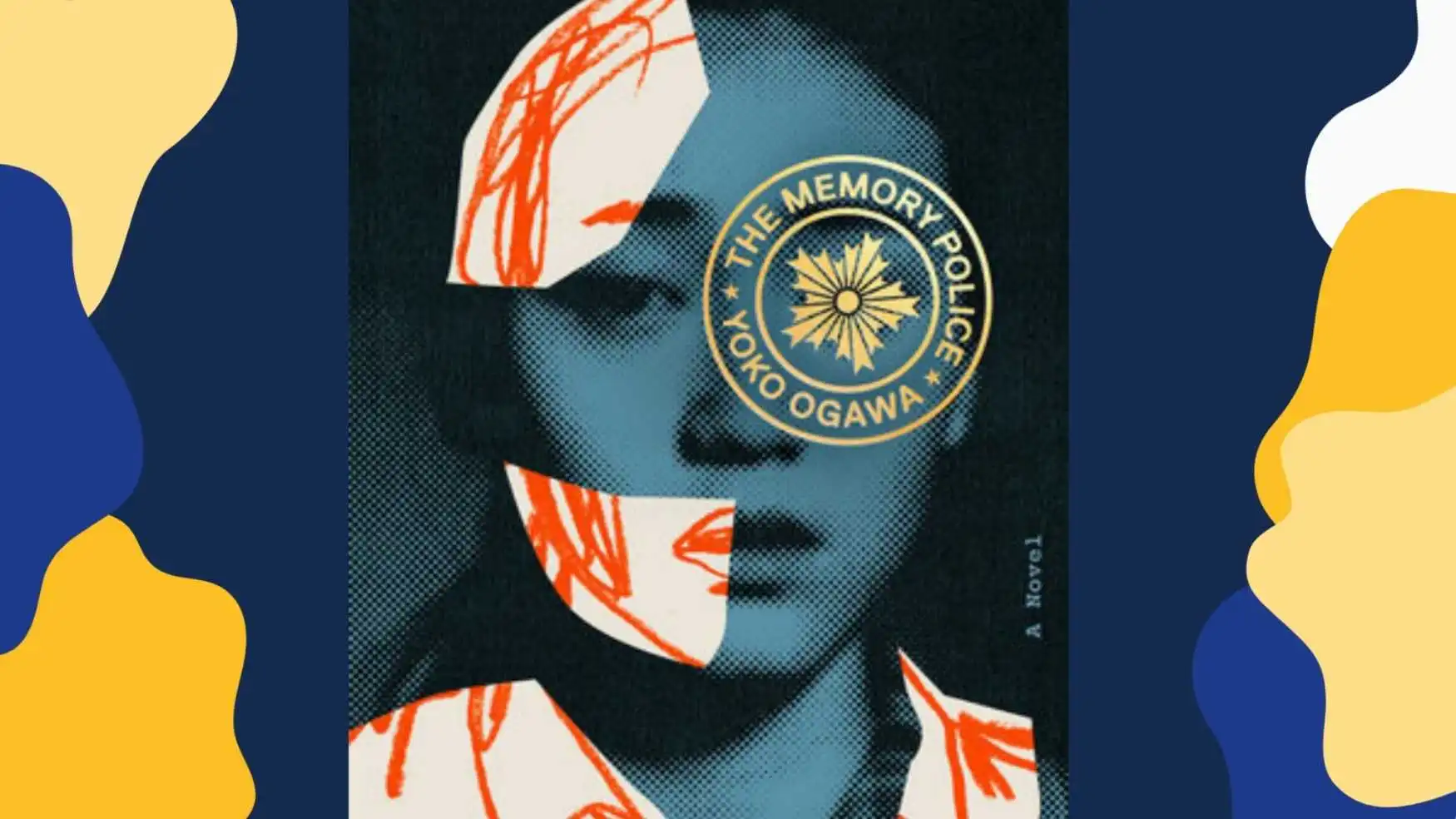

The Memory Police by Yoko Ogawa is usually studied in the Australian curriculum as a Text Response. For a detailed guide on Text Response, check out our Ultimate Guide to VCE Text Response study guide.
Within the THINK strategy, we have 3 steps, or ABC. These ABC components are:
Step 1: Analyse
Step 2: Brainstorm
Step 3: Create a Plan
Let’s get into it!
The Prompt:
The role of storytelling as an act of defiance is integral to the narrative of The Memory Police. Discuss.
THINK
Step 1: Analyse
When I first look at this prompt, I recognise that it’s a theme-based prompt (check out this blog if you’re not familiar with the 5 essay types). Key words that stand out to me are ‘storytelling is an act of defiance’, which immediately tells me that storytelling isn’t just something that is happening in the narrative, but it’s purposeful and resistant. The word ‘defiance’ also suggests opposition to power or control, so I know I need to explore how storytelling pushes back against something, rather than simply describing the stories that exist in the text.
The prompt also focuses on the ‘role of storytelling’, which signals that I shouldn’t narrow my response to just one example. Instead, I need to think broadly about what storytelling does and why it matters. This encourages me to consider different forms or functions of storytelling and how they contribute to the novel overall, rather than treating it as a background detail.
Another key word here is ‘integral’. This introduces an evaluative element, as I’m being asked to judge how essential storytelling is to the narrative as a whole. In other words, I need to show that storytelling isn’t optional, but rather, is central to how the novel works and what it’s trying to explore.
Finally, it includes the word ‘discuss’, so I know I need a balanced response. Rather than arguing one rigid viewpoint, I should explore the idea from multiple angles, weighing its significance and complexity.
Step 2: Brainstorm
For this prompt, the main concepts I’m working with are:
- Storytelling
- Defiance
- Integral (how central storytelling is to the novel and Ogawa’s purpose)
From there, I can start mapping out how these ideas connect by asking myself questions.
What forms does storytelling take in the novel?
In The Memory Police, storytelling isn’t just one thing. It appears in several forms, including:
- Written narratives (The process of the narrator writing her manuscript/novel)
- Oral storytelling and shared memories
- The preservation of personal memory
- The act of bearing witness to what has been lost
Each of these forms directly challenges the regime’s enforced forgetting, which positions storytelling as an act of defiance, rather than mere reflection.
Key examples of storytelling as defiance:
- The narrator’s act of writing despite the increasing disappearances
- R’s preservation and explanation of disappeared objects
- The narrator’s mother and her remembered past, preserved secretly
- The act of hiding R and recording memories
- The continuation of language and emotional expression despite erosion
These movements don’t overthrow the regime, but quietly push back against it.
How is storytelling portrayed as defiant within the narrative?
- Defying authority
- The Memory Police control power by deciding what can be remembered, but writing and remembering refuse the state’s rewritten version of reality
- Preserving identity and humanity
- Forgetting leads to emotional numbness and passivity
- Storytelling allows characters to hold onto individuality and empathy
- R’s memories give language to experiences others have learned to suppress
- Resisting silence and complicity
- Most citizens accept disappearances without protests
- Storytelling becomes one of the few remaining ethical responses
- By recording loss, the narrator refuses to fully comply with the regime
Why is storytelling integral to the narrative?
Storytelling isn’t just a theme, it shapes the structure of Ogawa’s narrative itself.
- The novel is framed as an act of storytelling
- The plot moves through cycles of remembering, recording and erasure
- The fragility of storytelling makes its resistance even more powerful
Relevant context that supports this idea:
- Parallels to The Diary of Anne Frank
- The narrator’s writing process preserves humanity under oppressive conditions. Both texts present storytelling as a means of asserting existence and moral agency when external resistance is impossible. Anne Frank did not stop the Holocaust, yet she endured as a defiant testimony. Similarly, Ogawa’s meditation does not overthrow the regime but resists total erasure by recording what has been lost.
- World War II and Japan’s concealed history
- Japan’s defeat in WWII left Hiroshima and Nagasaki devastated. Post-war Japan had been criticised for selective memory regarding wartime actions, particularly in education and public discourse. Ogawa’s novel reflects anxieties about what happens when societies choose erasure over accountability.
- Internalised self-regulation and pervasive Japanese Ethos of Shikata ga nai (“it cannot be helped”)
- This philosophy encourages the acceptance of unavoidable suffering. In the novel, citizens respond to disappearances with resignation rather than resistance, mirroring a cultural tendency to normalise loss instead of challenging its cause. This ethos may be attributed to the pervasive nature of Confucianism in Japanese culture.
Step 3: Create a Plan
Paragraph 1: In a society governed by enforced forgetting, the systematic erasure of memory suppresses individual selfhood and normalises compliance, rendering storytelling a vital act of defiance and survival against authoritarian control.
Paragraph 2: Through the narrator’s continued writing and artistic creation, Ogawa illustrates how storytelling functions as a quiet yet enduring form of resistance that preserves identity and narrative agency despite pervasive oppression.
Paragraph 3: By portraying storytelling as a means of bearing witness and preserving legacy - even when resistance appears futile - Ogawa suggests that narrative acts sustain humanity and moral purpose under totalitarian regimes.
EXECUTE
Now it is time to write the essay!
The true horror of The Memory Police (1994) lies not in what is taken, but how easily the mind learns to let go (1). Yoko Ogawa’s chilling dystopian novel examines how identity and emotional connection unravel under passive compliance. In her magical-realist meditation, she posits how storytelling is paramount in sustaining the human spirit, as when society is devoid of these quiet acts of defiance, individuals are susceptible to falling complicit in hegemonic rule (2). Central to the novel is the way that authoritarian figures suppress the resistance of the collective through cultural erasure, continuing to diminish the integral nature of the human experience (3). Moreover, it is through pursuing one’s artistic endeavours that not only allows for the preservation of memories, but concomitantly the creation of stories that continue intergenerationally (4). And thus, storytelling then becomes a physical manifestation of sustained selfhood, even in a society that aims to diminish one’s sense of humanity and optimism (5). In essence, Ogawa ratifies the presence of storytelling in a prism engulfed by fascist ideology, as it is a quintessential part of the human essence, vital to safeguarding personal identity (6).
Annotations
(1) My opening sentence functions as a conceptual hook, where the novel’s ‘horror’ is reframed as psychological compliance rather than a physical loss.
(2) Subtle context weaved in - the author, year, genre and contention are established here. Avoid too much historical/social/cultural context in the introduction, as the body paragraphs will uncover these in more detail.
(3, 4, 5) I’ve used my introduction to map out my arguments in each of these sentences, simultaneously using signposting (the words in italics) so that my teachers/examiners have a clear outline of what each of my body paragraphs will encompass.
(6) The final sentence of the introduction presents Ogawa’s overall intention, asserting that storytelling is integral to preserving identity and humanity, directly answering the prompt.
Seminal to the novel is how individuals on the island suppress their desire for selfhood under the guise of survivability, and instead succumb to the rules imposed by tyrannical forces (7). In the rising action, it is established that the mother’s studio, that nestled the ‘old cabinet’, was a physical manifestation of the stories that would strengthen memories intergenerationally. The narrator revels in the presence of the ‘ribbon […] bell’, indicative of the subtle luxuries in prosaic living, as they are paramount items that preserve one’s personhood amidst tyrannical dominion (8). Storytelling remains integral, especially in the face of oppressive forces, as continued in the narrative when the narrator’s mother is ‘taken away’, speculating that her ‘DNA’ would be tested. This flashback in the exposition foreshadows how the holistic compliance with tyranny lends verisimilitude to one fading into obscurity, as their selfhood is compromised. The utilisation of short syntax (9) imbued within her minimalistic writing style (10) highlights how, though ‘no one can erase [these] stories’ (11), individuals have an intrinsic desire to sustain the human spirit through storytelling. Ogawa thus champions that though these recollections may be melancholic in nature, what remains when individuals are deprived of these memories is a disconnect from their familial bonds. This is furthered in the direct characterisation of the collective ‘body of the Memory Police’, as their actions were ‘efficient […] thorough’, and in tandem they are ‘without any trace of emotion’. Acting with such efficiency, the Memory Police find success in rewriting personal experiences by establishing a pervasive and all-encompassing system of power, wherein they no longer need to pursue resisting individuals as the narrative progresses. Essentially, Ogawa vilifies (12) the agenda of authoritarian regimes that continue to obliterate memories, as the longevity of this can precipitate a profound diminishment of one’s identity.
Annotations
(7) The topic sentence of this body paragraph extends the contention into a focused line of argument by linking to the thematic concerns of ‘selfhood’ and ‘survival’. These are ideas I first explored in my brainstorm, then signposted in my introduction.
(8) Try to utilise niche symbols/motifs to strengthen your response. Niche examples are integral to making your essay stand out and be more memorable. Here, I analysed the ‘cabinet’, and related it to storytelling, by its transformative qualities, and how the items (such as the ‘ribbon [...] bell’) nestled within are able to preserve memory.
(9, 10) Here, I’ve commented on Ogawa’s minimalistic writing style, and short syntax is a prominent feature. This provides a greater understanding of authorial style and improves clarity.
(11) I’ve seamlessly embedded a quote here. Avoid memorising long quotes, as they interrupt the flow of your essay. If you need more help on how to use quotes, check out our How To Embed Quotes in Your Essay Like a Boss guide.
(12) By using the word ‘vilifies’, I’m being very explicit about Ogawa’s views and values. Balancing implicit and explicit ways of referring to the author’s views and values can be a nice way to give your essay more dimension and make it feel less like you’re just trying to tick off the criteria. For a vocabulary list you can use for future essays, head over to this blog post on authorial intent.
As memories continue to erode, ensuring the preservation of one’s artistic endeavours whilst authoritarian systems of power exist remains paramount, as without it, individuals continue to surrender their agency (13). The narrator's ability to continue writing her ‘manuscript’ is innately a quiet act of resistance, as she acknowledges that her incorporeal voice as a writer could last intergenerationally. Given that memories are transient, the narrator combats this by physically writing her legacy, and hence capturing ‘[her] heart when it begins to stir’, and by extension, her ‘existence’. This is confirmed when R convinces her to continue writing, after the disappearance of novels, metaphorically retorting that ‘your soul is trying to bring back the things it lost in the disappearances’, indicative of how storytelling perpetually retains selfhood amidst fascist dominion. Moreover, in the prism of her manuscript, though she manifests her assent to hegemonic rule, she still preserves human experiences, whereas the Memory Police attempted to erase the universal plight of the island’s inhabitants (14). The predator-prey dynamic imbued within the portrayal of the typist and her teacher parallels the corporeal realm of the narrator. It is here that the typist metaphorically ‘lost the ability to make sense of [herself]’, given that she ‘lost [her] voice’, highlighting that it is the loss of bodily autonomy and personal voice, indicative of the pervasive nature of tyranny. Metaphysically, the lack of physical ability in the embedded narrative highlights how the typist is exclusively reliant on the typist’s teacher and is reduced to a ‘voice aimlessly drifting’ (15). However, this acquiescence to the Japanese ethos of ‘shikata ga nai’ conveys a juxtaposition, as though the narrator becomes complicit in the disappearances enforced by the Memory Police, her incorporeal property as a writer continues to last intergenerationally (16). Subsequently, Ogawa cautions (17) readers against the perils of losing narrative agency, as such can lead to a profound disintegration of identity and self-understanding (18).
Annotations
(13) The topic sentence for my second body paragraph reframes writing as a form of narrative agency, maintaining direct alignment with the prompt’s focus on ‘storytelling’.
(14) The manuscript functions as a metanarrative (a narrative account that explores the idea of storytelling, by drawing attention to its own artificiality) device, allowing Ogawa to comment on the endurance of storytelling beyond the capacity of memory. See What Is Metalanguage? to ensure you understand what metalanguage is and how to use it in your essays.
(15) I have analysed the typist’s narrative as an allegory for bodily and narrative dispossession, rather than being treated as a concern that parallels the plot.
(16, 17) The reference to the Japanese ethos of ‘shikata ga nai’ provides cultural context, which explains passive compliance without excusing it, strengthening my statement about authorial intention in the sentence that follows.
(18) I make sure that the final sentence of each paragraph links back to the authorial intent. I utilise words that are synonymous with endorse/challenge/marginalise, depending on what the author’s stance is.
Additionally, though novels have been erased from existence, storytelling concomitantly sustains the human essence in the metanarrative (19) that the inhabitants aim to alter. In the preamble of the novel, the narrator and her ornithologist father are pictured basking in the presence of ‘birds’ prior to their disappearance. Here, a story is told through the tangible ‘photographs’ (20) of birds that highlight how her father’s legacy is still preserved in the corporeal realm. As the novel progresses, the natural environmental process of ‘snow’ subsumes the island, leaving inhabitants to face an ‘eternal winter’, indicative of the growing emotional numbness that permeates as the narrator reluctantly rekindles the ‘frightening memories’ of her past. The utilisation of suffocating imagery as the inhabitants metaphorically ‘lay buried under the snow’ is extended by juxtaposing this environmental process with that of ‘flames’. Ogawa wields the disparities in nature to convey how, irrespective of the season, the agenda of the Memory Police continues to pervade (21). The suffocating agenda is reflective of Ogawa’s inspiration from The Diary of Anne Frank (22) as she too experienced a regime, the one of Nazi Germany, that forced individuals to compromise their agency in the name of survival. Consequently, Ogawa ratifies individuals channelling their grief and loss into creative expression, not only as a means of temporary resistance from the overwhelming force of tyranny, but also as retaining one’s legacy through art provides a sense of solace.
Annotations
(19) I’ve used metalanguage here - ‘metanarrive’ is a narrative that explores the idea of storytelling and comments on its own use of fiction.
(20) I analysed how ‘photographs’ are able to preserve familial bonds, even in the face of tyranny. Birds disappear later in the novel, but the narrator is able to maintain her memory of her father, however difficult it may be.
(21) Up to this point in the third paragraph, I have expanded on the definition of storytelling, which encompasses the changing environmental processes and the subsequent effect it has on memory. The changing environmental processes are quite niche, and I have embedded short quotes to accompany this argument. For more on this, watch this video on How many quotes should I use in an essay?
(22) The parallel to The Diary of Anne Frank is used to highlight bearing witness to tyrannical dominion. Ogawa drew inspiration from the themes of isolation, hiding and the power of memory when writing The Memory Police. Intertextuality and referencing other texts outside the scope of the novel show a deeper understanding of the ideas/historical events Ogawa was inspired by.
In the fragile world Ogawa constructs, storytelling is not merely a manifestation of defiance, but concomitantly is an outlet of protection, amidst a society that holistically disintegrates the presence of identity. Amidst pervasive erosion, Ogawa suggests that stories are manifestations of memory that function as legacies of their creators, where their beauty lies in their impermanence. Thus, this meditation leaves us with a devastating and redemptive paradox, that though everything may disappear, the human impulse to find a sense of purpose endures, whispering faintly even as the world around them forgets. (23)
Annotations
(23) In my conclusion, I’ve synthesised my ideas rather than repeating them, ending on a paradox that reinforces Ogawa’s message - that while memory disappears, the human impulse to create meaning endures. After writing the bulk of your essay, I understand how confusing conclusions can be, especially as it feels like you’ve already covered so much, so here are 5 Tips For A Mic-Drop Worthy Essay Conclusion to help you along your way!
If you enjoyed this blog and want more on The Memory Police, check out this blog post, where we explore characterisation within The Memory Police.