
Rainbow's End: Full Breakdown of Scenes, Key Moments and Themes
Content note: This blog discusses aspects of Australia’s colonial history and its impact on Aboriginal and Torres Strait Islander peoples. I acknowledge the Aboriginal and Torres Strait Islander peoples as the Traditional Custodians of the lands on which this work is written and shared. I pay my respects to Elders past and present and recognise their continuing connection to land, waters and culture.
Introduction: An Overview of Rainbow’s End
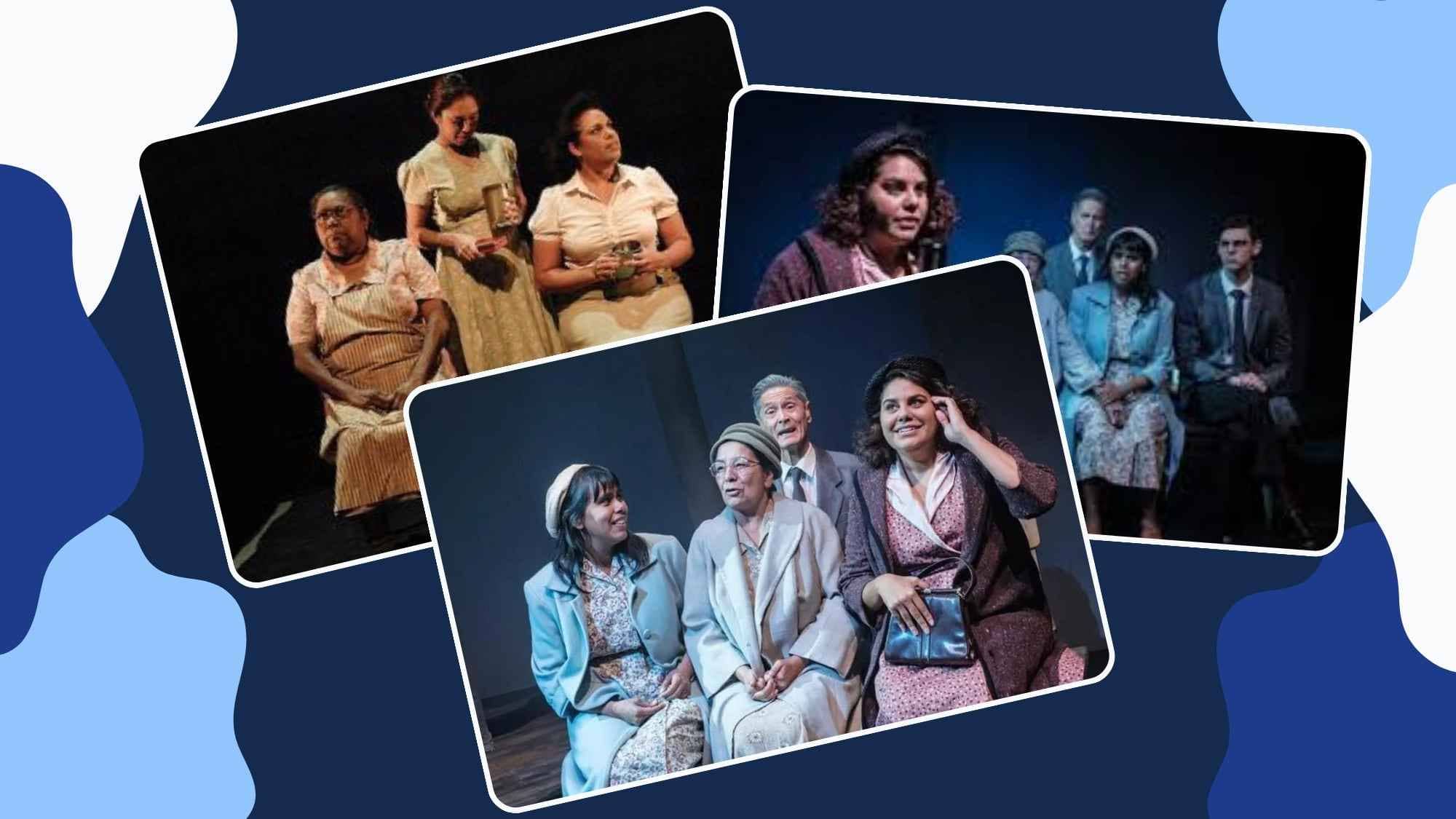
Jane Harrison’s Rainbow’s End is a play set in 1950s Australia that follows the lives of three successive generations of First Nation Women from the Banks family. Whilst living under suppressive government policies and enduring the racial challenges along with social segregation, Rainbow’s End is a powerful depiction of how family, resilience and love can give the strength required to stand up and fight back.
This blog will unpack each scene of the play with summaries, key themes and key moments of each part of the play.
Act 1: Analytical Summary Scene by Scene
Scene 1: (A) Queen’s Visit & (B)
Summary: Gladys listens to Queen Elizabeth II on the radio and travels to town hoping to see her despite her mother, Nan Dear’s, reading her for being a ‘loyal subject’. After her taxi fails to pick her up, Gladys walks along the road but returns home disappointed, having missed the Queen because the hessian fencing blocked the view of the riverbank humpies.
Key Themes: Trauma, Injustice
Key Moments:
- Gladys’s glorification of the British Royal family is juxtaposed by Nan Dear’s extreme dislike of the royal monarchy
- The theme of racial discrimination is explored through Nan Dear’s cynicism about a future of racial equality due to her extensive experience with abuse of power
- The colour white is used throughout the play as a symbol of white supremacy; in this scene, the white gloves embody that ideology
- Dream sequence - Gladys dreams of meeting the queen, where she holds flowers in her trance that turn into weeds. This symbolises the superficiality of the higher class
- The boomerang represents the facade of racial equality
- The hessian fencing covering up the First Nation peoples’ housing is a symbol of racial segregation.
Scene 2: (A) & (B) Oh Errol
Summary: Gladys aces a radio quiz show and dreams of bigger opportunities for Dolly, causing tension between herself and her mother over education and tradition. When a young encyclopedia salesman visits (Errol), Gladys is tempted by his promise of knowledge, but Nan Dear questions its value and Dolly develops an attraction towards him
Key Themes: Trauma, Injustice, Identity
Key Moments:
- Dream sequence - Gladys’s dream reinforces her desire for acceptance by the white Australian community for both herself and her daughter
- Encyclopedias - These represent the white Australian way, presenting white Australia as objectively superior
- Mink stole - This object is a symbol of white power and wealth
- Errol, the encyclopedia salesman, is a character symbolic of hope
- When Errol’s bike is stolen, it showcases the circumstances of the First Nations peoples’ living conditions and economic struggle. This can cause these communities to diverge from their beliefs
Scene 3: Lino
Summary: Dolly retreats into fantasies while scavenging at the dump and later shares an awkward but flirtatious moment with Errol, revealing her limited hopes for the future. When Gladys arrives proudly with a bookshelf, Dolly feels embarrassed by their circumstances.
Key Themes: Trauma, Injustice, Identity, Empowerment, Hope
Key Moments:
- Dream sequence - Dolly’s desire for social acceptance and a brighter future is revealed indirectly through her dream sequence
- This desire for social acceptance is also translated directly through her conversation with Errol
- Harrison instils in Errol a young-minded innocence which allows him to see the Banks without hatred or division, but instead with interest and curiosity
Scene 4: House of Biba
Summary: Dolly assists in setting the table and briefly imagines Papa Dear’s return, despite the fact that he has been away preaching for months. Later, when Dolly shares her hope of getting a cashier job, Nan Dear dismisses her idea, insisting she will stay with her, warning her that a town store would never hire an Aboriginal girl from The Flats.
Key Themes: Trauma, Resilience, Hope
Key Moments:
- Despite Nan Dear’s cynical mindset, she still believes her husband will return
- Dream Sequence - Gladys’s dreams represent her desire for a nuclear family
- Ajax ad - Harrison presented racial discrimination through the Ajax Ad as a metaphor for 1950s Australian society, which wanted to ‘scrub’ Aboriginal and Torres Strait Islander culture through segregation and assimilation, whilst portraying to the public that their course of action was progressive
Scene 5: The Delivery
Summary: Errol sells Gladys an encyclopedia set, sparking memories of Dolly’s childhood, while Dolly feels embarrassed by his presence in the humpy. Later, he asks her to a dance, and though she hesitates because of town prejudice, she cautiously agrees before Nan Dear sternly sends him on his way.
Key Themes: Trauma, Resilience, Hope
Key Moments:
- Gladys’s resourcefulness and cultural knowledge demonstrated the cultural difference between First Nations people and white colonisers
- Gladys’s mention of Dolly’s ‘Glory Box’, shows her hope for Dolly’s future, rejecting every idea that Dolly will continue to live in poverty
- Dolly’s acceptance of Errol’s invite symbolises hope (‘what matters is you… Not your address’)
Scene 6: The Inspection
Summary: A white inspector visits the humpy, patronisingly urging Gladys and Nan Dear to assimilate to the white culture while also assessing their living conditions. After seeing Dolly, the family fears the government might take her away.
Key Themes: Trauma, Injustice, Empowerment
Key Moments:
- The First Nation’s community is being infantilised by white society, showing a clear class divide
- The Inspector’s lack of concern highlights the ignorance of 1950s white Australian society towards the First Nations people.
- Harrison blurs the boundaries between imagination and reality by showing Gladys’s intention to make her dreams come true
Scene 7: The Turn
Summary: Gladys dresses up for a fundraiser to help raise money for Aboriginal housing at Daish’s, while Dolly prepares for her date with Errol. When Nan Dear feigns illness after learning about the date, Dolly cancels to take care of her
Key Themes: Trauma, Injustice, Resilience
Key Moments:
- Rainbow's End title reveals connection to Rumbalara. The ‘end of the rainbow’ metaphorically refers to the hopeful nature of housing as the end of a rainbow typically is where one would find treasure
- The Ajax cleaning motif is a manifestation of Nan Dear’s fear of losing Dolly to white society.
Scene 8: Washing Day Blues
Summary: Dolly returns from school worried about Ester’s sons, while Gladys urges her to join a trainee program, frustrating Dolly with her push toward white ways. Nan Dear reassures Dolly that their life is normal and promises to make her a new dress for the Miss Maroopan-Shepparton Ball
Key Themes: Trauma, Injustice, Resilience
Key Moments:
- Through Ester, Harrison reveals the consequences of colonisation on First Nations communities as it causes a ripple on effect for Ester’s children as they are taken away
- Importance of family is highlighted in this scene through the use of ‘brindle’ and superiority complexes
- Dolly conforms to Nan Dear’s ideologies on the division between First Nations and Australian White societies
Scene 9: Home Sweet Home
Summary: Gladys tells Dolly about the encyclopedia and encourages her to go to the ball with Errol, urging her ‘not to let them shame [her]’. Dolly pushes back, and when Nan Dear enters, Gladys insists she wants Errol to walk Dolly home.
Key Themes: Trauma, Injustice, Resilience
Key Moments:
- The music lyrically indicates the Bank’s belief in Papa Dear’s return
- Gladys conforming to white ideals
- Nan Dear points out that raising girls is different to raising boys. Through this, Harrison depicts the intersectional struggles of being a woman of colour in a white dominant, patriarchal society
Scene 10: Mrs Bank Versus the Bank
Summary: Gladys pressures a bank manager to hire Dolly, countering his doubts and excuses about her daughter's qualifications. Eventually, he agrees to give Dolly an interview.
Key Themes: Trauma, Injustice, Resilience, Hope, Empowerment
Key Moments:
- Gladys’s Jam Tin - Non-indigenous objects are perceived as better than objects created by First Nations people
- Perceives superiority from bank teller - this is further demonstrated through the use of euphemism ‘oh, fountain pens are a little tricky, aren't they’, hiding the fact that Gladys cannot write
- The intense questioning of Dolly on basic things demonstrated the extra precautions First Nations People must endure compared to the white community.
Scene 11: The Ball
Summary: Dolly dances with Errol at the ball, facing stares from white partygoers, dreaming of winning, but that title goes to a white girl who mocks her dress. Humiliated, Dolly flees, running into her drunk cousin Leon, who attacks her and Errol, tearing her dress and giving Errol a black eye.
Key Themes: Injustice, Trauma
Key Moments:
- Dolly struggles with identity as she longs to be accepted. The duality in her personality is incongruent, and both parts of her cultural identity are not able to overlap. Thus, we slowly see Dolly adapting to Nan Dear’s cynical mindset
Scene 12: Storm Brewing
Summary: At the humpy, Gladys imagines Dolly having a wonderful time, but Nan Dear senses that something is amiss
Key Themes: Injustice, Trauma
Key Moments:
- The shortness of the scene gives the audience a sense of foreboding as the story moves towards its climax
- The kerosene lamp getting blown out is symbolic of the hope that is being blown out by the wind
- From this point on in the text, Dolly doesn't have anymore dream sequences
Scene 13: Water Rising
Summary: Errol finds Dolly crying at the river, and they share stories about their very different families - Dolly’s close-knit, labour-filled extended family versus Errol’s strict, traditional, white, middle-class household. Though they grow closer, Dolly rejects the idea of an interracial relationship, prioritising her family and home, and begins walking home before being intercepted by her cousin Leon
Key Themes: Injustice, Trauma, Hope, Empowerment
Key Moments:
- There is a distinct tonal shift as Dolly’s delusions go away and she finally faces reality
- The stormy weather indicated her lack of agency as a woman
- Since Errol represents hope, Dolly’s abandonment of Errol represents her personal abandonment of hope
Scene 14: The Flood
Summary: Nan Dear and Gladys pack the humpy to evacuate for a flood, worried because Dolly is still missing. She arrives just as they are leaving, traumatised and unresponsive, recoiling from the jungi’s touch
Key Themes: Injustice, Trauma, Hope, Empowerment
Key Moments:
- Harrison imposes a cyclic narrative structure through the flooding and the use of the song Que Sera Sera at the beginning and the climax of the play. This cyclic narrative further highlights the cycle of generational trauma
- The rise of the river is a metaphor of the suffocating cycle of injustice that First Nations people face
- Pathetic fallacy is utilised to show that the family has lost the opportunities for a better life
Act 2: Analytical Summary Scene by Scene
Scene 1: After the Flood
Summary: After the flood, Dolly returns to the humpy still traumatised, wearing her ruined ball dress, while Nan Dear and Gladys clean up and mourn the loss of Gladys’s encyclopedias. When Errol comes to apologise, they angrily drive him away, but Dolly later clarifies that he was not responsible for her assault
Key Themes: Injustice, Trauma, Empowerment, Resilience
Key Moments:
- Harrison points out how assimilation policies can influence the value of the belief system of the First Nations familial groups
- Gladys has become defeated and gives up on her dream of white assimilation, shown through her acceptance of the ruined encyclopedias
- Thus, Gladys’s change mirrors Dolly’s when she realises family is more important than her possessions
- Rejection of Errol represents the Banks’ refusal to submit to cultural assimilation without meaningful change
- The diegetic noises of the bulldozers are symbolic of westernised society and the destruction of traditional First Nations life
Scene 2: The Move to Rumbalaral
Summary: A bulldozer destroys the family’s humpy, forcing them to move into a small, sterile concrete house at Rumbalara. Despite developing a cough, Nan Dear promises to make curtains for their new home.
Key Themes: Injustice, Trauma
Key Moments:
- The white colour motif that was previously positive is now negative. This represents the change in Gladys and Dolly from hopeful and optimistic to pessimistic and despondent about their new living situation
- Nan Dear’s coughing represents how out of place their family is in 1950s white Australian society
Scene 3: The Broadcast
Summary: Gladys brings Dolly a bank letter, but Dolly rejects the teller job, insisting it’s her mother’s dream, not hers, and tells Gladys to ‘fix [her] own house’, prompting Gladys to storm out. Later, Nan Dear and Dolly hear on the radio that Gladys was removed from a city council meeting while arguing for Aboriginal housing at Daish’s, leaving them proud of her
Key Themes: Injustice, Trauma, Identity, Empowerment, Resilience
Key Moments:
- The scene’s opening, where she is cleaning the ‘dirty’ potatoes to reveal the white insides, is a metaphor for the policies of assimilation, which attempted to remove the cultural exterior of First Nation communities to reveal white attitudes and behaviours
- Pressure of conforming are also seen through the colour of the walls in their house, along with the skin whitening powder
- The line ‘I belong here - this is my land!’ highlights an important authorial comment Harrison makes on the suffocating influence of British sovereignty, where colonial institutions, such as capitalism and Catholicism, rob First Nations People of both their lands and freedom
Scene 4: The Contract
Summary: Errol helps Gladys cancel her encyclopedia contract and teaches her to read and write after she admits she never had the chance to learn. Gladys apologises for suspecting him of assaulting Dolly, but gently tells him she cannot see her, while Errol still hopes to prove himself worthy of her
Key Themes: Injustice, Identity, Resilience, Empowerment
Key Moments:
- Gladys’s once strong conviction to bolster Dolly's education has since weakened, representing her lost hope for joining white society
- Harrison intimated that ignorance does not absolve compliance, meaning, Errol must earn his way back into Dolly’s life
- The diegetic song lyrically symbolises luck through the ‘falling stars’
Scene 5: Pay the Rent
Summary: When the rent collector intrudes while Nan Dear cooks for Dolly, she defends their privacy by throwing eggs at him, forcing him to flee. Later, Dolly learns the truth about her parentage and, while grappling with her feelings about Errol, decides to stay with her family rather than resume their relationship
Key Themes: Injustice, Identity, Trauma
Key Moments:
- Harrison reveals that strength comes from a familial unit’s persistent perseverance through hardships. Both Dolly and Gladys have their realisation of the importance of family at the end of Act 1, thus Dolly and Nan Dear’s connection here can be seen as a confirmation towards those ideas
- ‘Somewhere over the rainbow’ signifies Rumbalara, foreshadowing the play’s positive ending
- When Dolly verbalises the normally non-diegetic sound ‘Que Sera Sera’, Harrison employs intertextuality, alluding to the idea of free will
Scene 6: Errol Spills the Beans
Summary: Errol teaches Gladys to read using the inspector’s report, and they discuss his feelings for Dolly, which he admits are still strong but uncertain. Gladys invites him to a Melbourne meeting on Aboriginal housing, telling him she likes him even if he and Dolly don’t end up together
Key Themes: Empowerment, Identity, Trauma
Key Moments:
- Gladys has accepted Errol as part of her family, indicating the hope she holds for Dolly and him in the future
- Harrison purports that white Australians must form connections with First Nation communities to understand their hardships and the importance of culture in order to stop the intergenerational cycle of trauma
Scene 7: The Petition
Summary: Nan Dear, Gladys and Dolly celebrate Dolly's baby girl Regina as well as attending Gladys’s delivery of Papa Dear’s petition, calling for fair housing, education and respect for the First Nations people.
Key Themes: Empowerment, Identity, Trauma, Injustice, Resilience
Key Moments:
- Commentary about gender roles are introduced as Nan Dear labels speech-making as ‘men’s business’. This notion is immediately rejected by Gladys as she later on read that speech herself
- Harrison recognises the intersectional issues facing First Nations women, showing that gender empowerment is not the same for all women
- We see the cyclic structure of the play returning in the final scene as Harrison makes a number of connections to the prologue, overlaying the song Que Sera Sera and the flooding, synonymous with the beginning and the climax of the play
Conclusion: Bringing the Analysis of Rainbow’s End Together
Rainbow’s End ultimately communicates the strength and resilience of Indigenous women navigating a predominantly white society structured to marginalise them. While each moment of the play reveals the immense pressure of assimilation and systemic racism, the play does not end in defeat. Instead, it highlights First Nations women's survival in enduring the complexities of being secure with their cultural identity. By centering on the lives of Gladys, Dolly and Nan Dear, Harrison reminds the audience that history is not only about the policies and oppressive nature many had to endure, but also about the people who lived through such trauma and persisted. In doing so, the play leaves us with a message of both realism and hope.
Rainbow’s End is usually studied in the Australian curriculum as a Text Response. For a detailed guide on Text Response, check out our Ultimate Guide to VCE Text Response study guide.