
Let’s briefly discuss the background of the article before we dive into the analysis…
- So, the background information tells us that “Biodiversity is the term used to describe life on Earth — the variety of living things, the places they inhibit and the interactions between them.”
- The article at hand is a transcript of a speech given by Professor Chris Lee at the International Biodiversity Conference 2010.
- The purpose of this conference is to review the progress made towards achieving the target and to look beyond 2010.
 Now, let’s analyse the opening of the speech. Take a second to read through Lee’s speech opener...
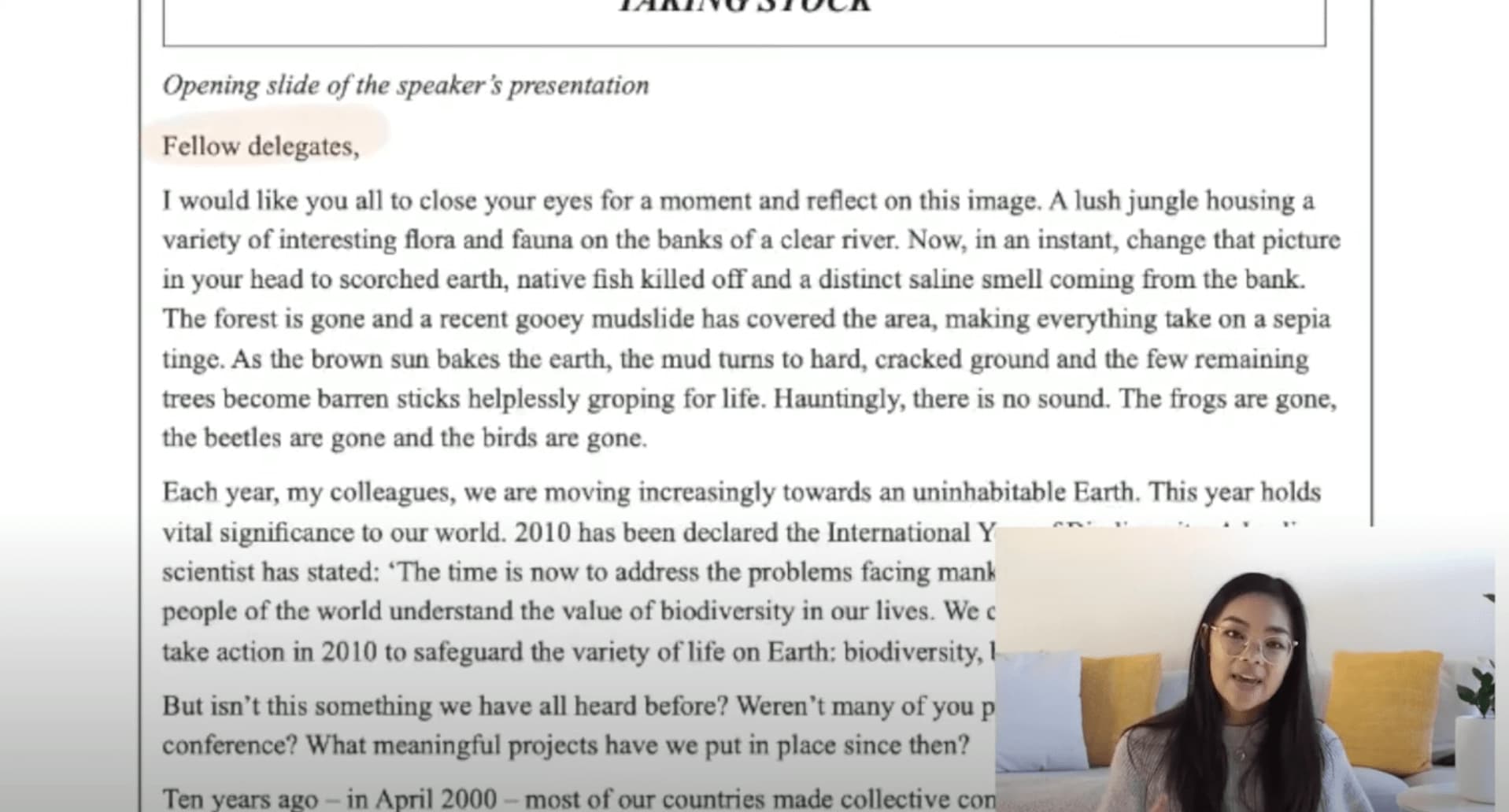
Firstly, we can analyse the way in which Lee addresses his audience. Rather than using a phrase like "Hi everyone" or a similar greeting, he actually refers to his audience as his "fellow delegates" which allows him to speak in a particularly candid and honest manner. He wants to be transparent about the reality of the situation with his peers, rather than trying to impress an audience or something similar.
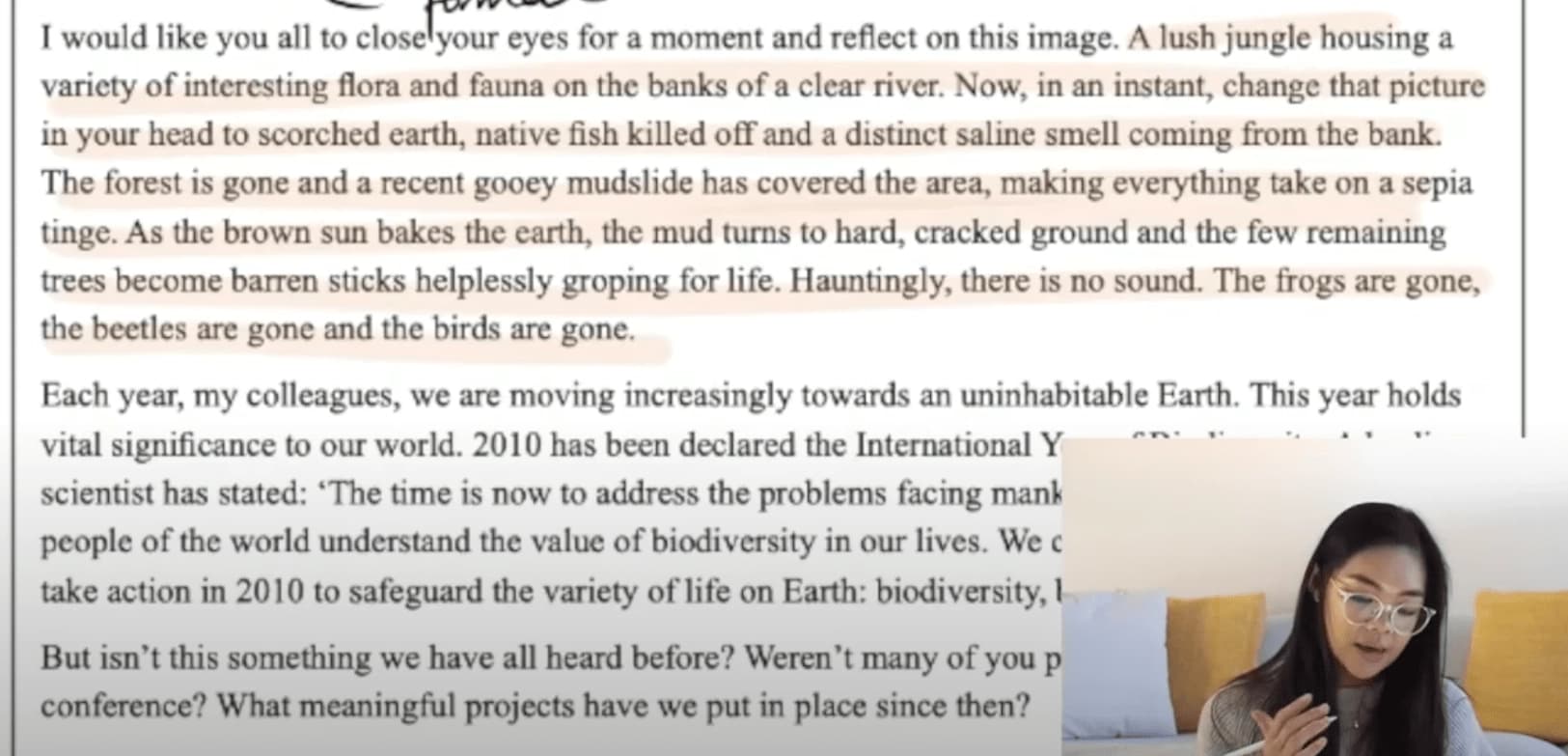
Overall, this anecdote appeals to the emotions of the audience and plays on an apparent devotion/commitment presumably made to the environment by the delegates of a Biodiversity conference. Lee uniquely seeks to persuade his audience by using the information he knows about them – their past commitments.
More specifically, we can dive into the pejorative mood of the adjectives he uses to describe the second scene, which is one of destruction, especially compare to the images he presents first. The "lush jungle" with a variety of "interesting flora and fauna" on the banks of a "clear river" appears particularly idyllic in juxtaposition with the images of the "scorched earth", "gooey mudslide", "sepia tinge" and "barren sticks hopelessly groping for life."
In the last sentence, the repetition of the word "gone" reminds Lee's "fellow delegates" of what will be lost if action on biodiversity is not taken.
Now, we know that in any given Language Analysis article, there are so many things to analyse, which I’ve demonstrated with all of the things we managed to focus on in that single paragraph.
Often, students will be able to identify lots of techniques and as such, lots of elements to analyse, but they struggle to choose between these techniques when it comes to writing their responses.
I’d highly recommend that you download a free sample of my eBook, How To Write A Killer Language Analysis which talks about techniques you can use to pick what to write about in your essays. We won’t have enough time to talk about those techniques today, so we’ve written them down for you in the eBook.
Now that we’ve looked at how Lee has started his speech, let’s skip forward to a later section of the article. Take a second to read through the section.
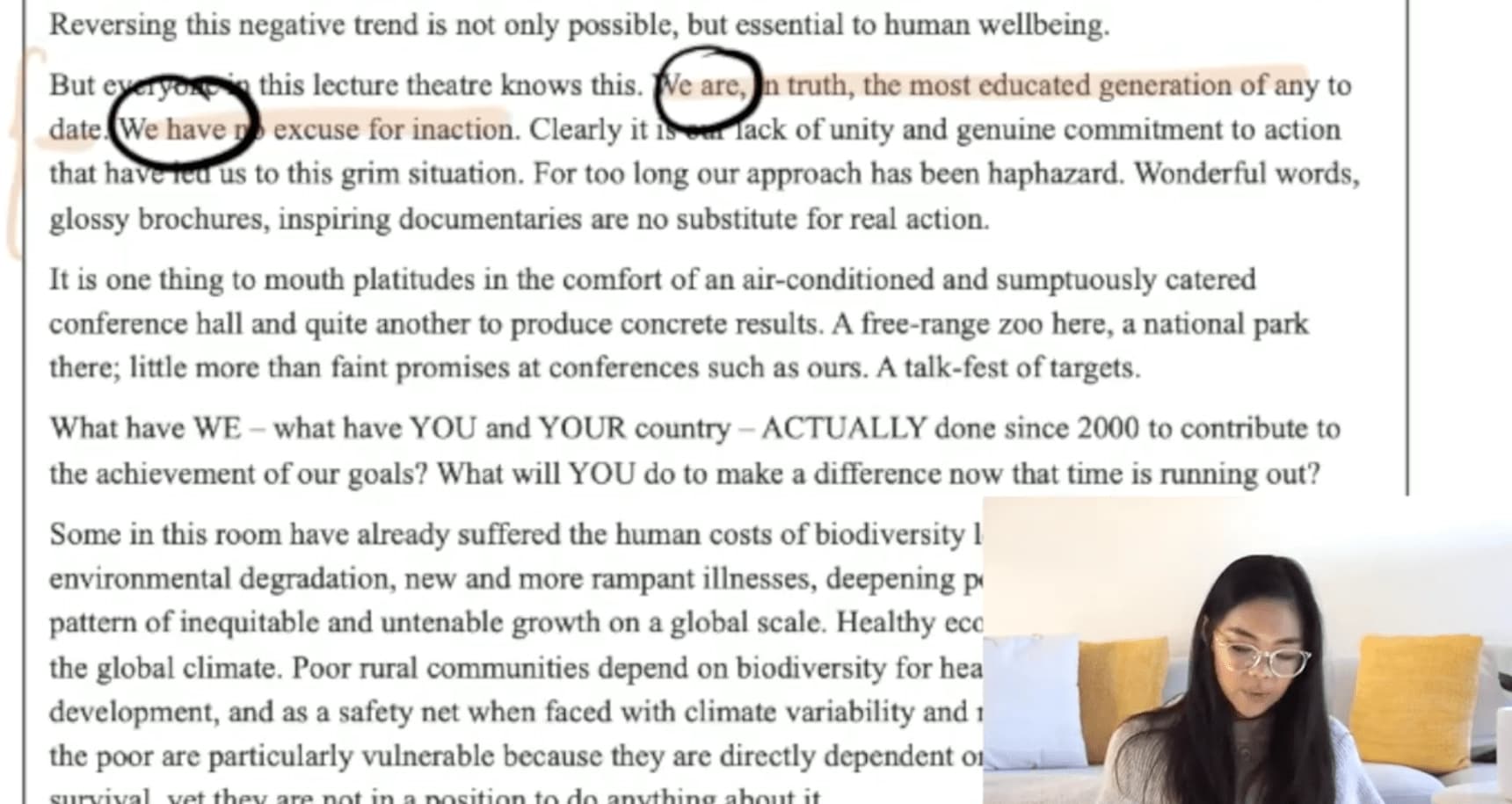
One of the first things that may jump out at you is this repetition of inclusive language; "we are", "we have". However, this is way too obvious! For an upper level response, we want to steer clear of the cliche techniques and analyse ones that have more value and show off our own perspective of the article.
Utilising the statements, "everyone in the lecture theatre knows this" and "clearly, it is our lack of unity", Lee includes the audience and holds all of the delegates accountable through declaring the reasons for failure as simple matters of fact.
Here, Lee trivializes the actions of the organisation in creating "glossy brochures" with "wonderful words" as marketing tools to create the impression that meaningful action is being taken. Lee exposes such actions as deceitful and calls for "real action", seeking to persuade his audience into putting their effort into actual gains in the biodiversity fight.
Want to know more? I'd highly recommend checking out LSG's FREE Ultimate Guide to VCE Language Analysis for more great tips, resources and advice.
And that’s it! I hope this has been helpful in showing how to analyse a speech as a Language Analysis prompt.
Be sure to check out the free sample of my eBook below for more!